
In the digital world, the history of web design is one of the field’s most interesting stories. Its evolution has run parallel to the growth of the internet, from its beginnings to today.
In fact, professionals who build websites have become some of the most in-demand profiles for companies worldwide. And with more companies, brands and products going digital every day, having plenty of experts in this field has become almost essential.
To understand how web design began, we need to go back to the 1990s. Back then, people connected to the internet over phone lines, and the files displayed were written in the HTML hypertext language.
1993: the year it all began.
In 1993, the first web browser, called “Mosaic,” was released. It ran on Unix systems. It was so successful that just a few months after launch, versions for Windows and Mac were created, and from that point on, the evolution of website design really took off.
But it wasn’t until 1994 that web design hit a milestone: the World Wide Web (www) was born. At the time, design was very limited, and designers could only build very simple, basic sites with text, tables and the occasional external link.
That’s why the first websites were unattractive, uncomfortable and not interactive at all. They had one very specific job for users: to be purely functional, with no attention to looks or aesthetics.

The arrival of HTML 2.
After this first stage in the evolution of website design came another milestone: the moment developers started thinking about building websites that were more eye-catching and practical for users.
That’s how HTML 2 was born, the second generation of the HTML language, with many more advantages than the first. This version was designed to fix all the flaws of the original.
First, connection speeds got much faster, making browsing much easier. Second, website design improved significantly: for the first time in history, you could have background images, organize content into menus and more.
Also, almost in parallel with web designers developing HTML 2, monitors and graphics cards gradually hit the market that significantly improved both the color and resolution of websites.
It was a huge step forward in the evolution of website design. It’s clearly a turning point, since it was the pioneering stage that, over the years, led to the evolution we see today.
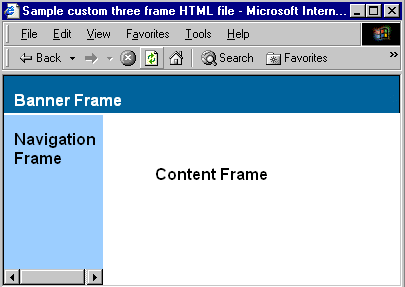 Image: tecnologiaenvivo
HTML 3: a new milestone in website design.
If the previous stage set a precedent, we now come to the biggest qualitative leap between versions of HTML: the move from HTML 2 to HTML 3. With this stage, the people building websites gained a whole range of possibilities through CSS style sheets.
Websites created at the time were considered third-generation, since they could have colored backgrounds and even animations, thanks to the birth of the GIF format.
It was a great stage, since it improved on what had been built with HTML 2. Thanks to HTML 3, web design began to become one of the most valued professions in the job market, and one of the most necessary and important parts of having an online presence for a business, brand or service.
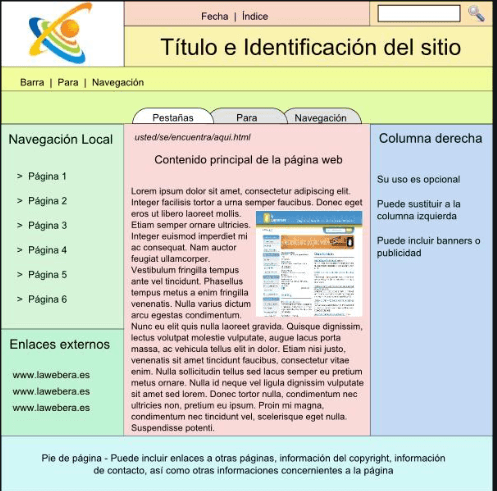 Image: slideshare
HTML 4 and 5 and the evolution of web design up to today.
We’ve reached the “final” stage of what we know today, but also the “starting” stage of what’s to come in website design. The evolution to HTML 4 brought a major qualitative leap in web design, especially in terms of accessibility.
HTML 4 offered a series of improvements to give people with disabilities access to the internet. Another big change was connection speed, which improved significantly in this stage.
It wasn’t long before programmers started asking how to build websites better suited to users’ modern needs, and that’s when HTML5 was born, the fifth version of HTML and the one we still use today.
This version brought a wide range of advantages and options for web design compared to HTML 4, including SVG graphics integration and new tags that made it easier to embed all kinds of multimedia content without plugins.

Image: conceptodefinicion
Website design today.
As technology grew, so did the need for websites with attractive designs that are also responsive, meaning they adapt to different mobile devices so users can access them quickly and correctly.
That’s how today’s website designs evolved to have the following features, all aimed at delivering more visual impact alongside functionality:
- Simple, very clean designs
- Mostly white backgrounds
- Very large images that take up almost the whole page
- Varied typography that looks “handmade”
- Lots of video, often full-screen
- Animations
- Striking images with a personality of their own
- Bright colors
- Mostly transparent buttons
- Diagonal graphic design
That, broadly, is how website design has evolved throughout history. On their own, these milestones might seem insignificant, but together they shaped web design as we know it today. We’ll have to wait and see what the future holds, but another evolution, and another turning point in website design, is already on the horizon.